
Butterflies & Bombs
An average, very normal day

The Earth trembles beneath my feet: like the others before it, this detonation is felt more than heard. Still, the crack of explosives reverberates through the sky from the South. The birds fall silent, casting the prairie in an eerie, muffled stillness. My stride doesn’t break on the invisible North-South line across the field as I look for an endangered butterfly.
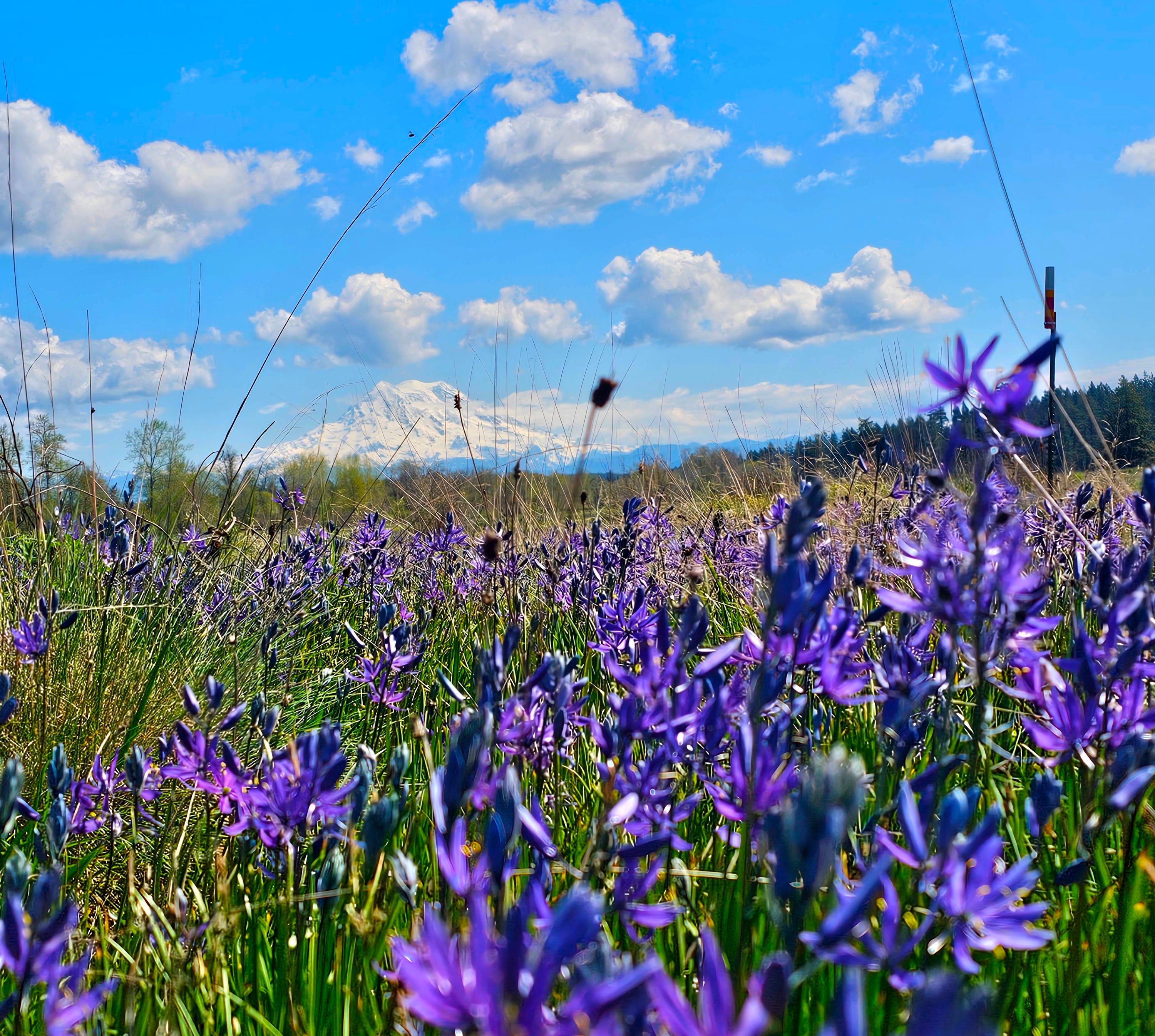
Spring is the sigh of relief after the doldrums of gray skies in Winter. Here in the Puget Sound Trough, the oak-savanna prairies are carpeted with deep violet camas as far as the eye can see, interrupted with smatterings of spring gold and buttercups, the swaying pink heads of sea blush and white bobbles of saxifrage, the occasional pop of neon orange from a harsh paintbrush. The land is bursting with color, the air thrums with birdsong, the scent of new growth washes every breath. It is easy to forget these grounds I tread are where humans train to bring calculated, efficient death to other humans.
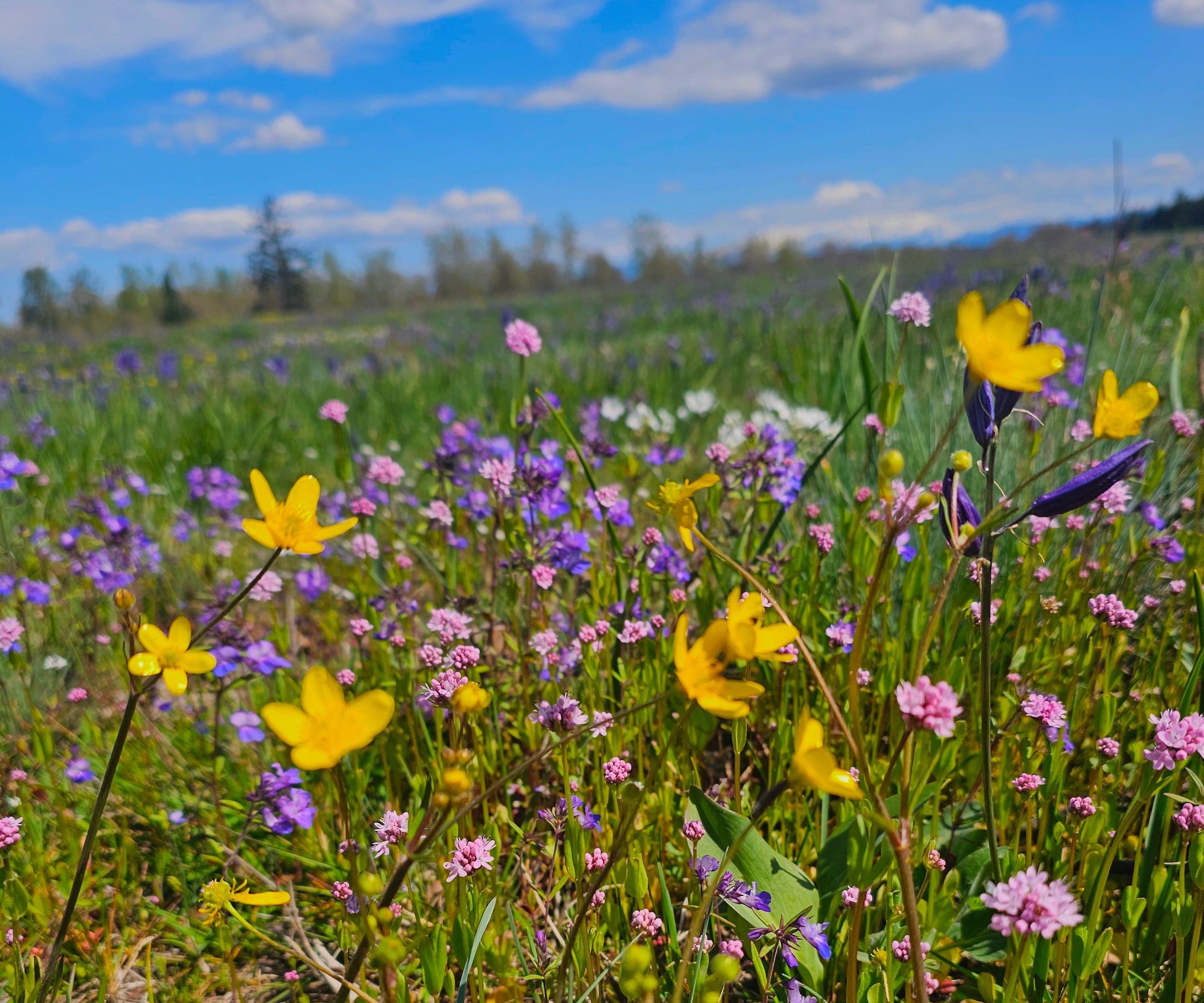
This is my second spring working with a conservation non-profit, and the dissonance of looking for butterflies while soldiers practice military drills nearby is something I am still not used to. Some of my colleagues say you never quite get over it, some say you learn to tune out the animal part of your brain insisting danger is near. “They’re doing their job, we’re doing ours,” is the rationale, but what it loosely translates to is: “Don’t think about it too much.”
I try not to dwell on the discordance of what I do and where I’m doing it. But when distant explosions shake the ground and the staccato beat of machine guns can be heard from miles away, it’s a difficult thing to ignore. Many sunny late mornings, I am in absolute bliss among the wildflowers, watching butterflies of all shapes and colors flit from plant to plant. Mount Tahoma stands sentinel in the East. Behind me, a helicopter turns and circles back to the south; it is just far away enough that I can only barely feel the beat of its blades on my eardrums. If I turn around, I’ll see the metal flying machine bear northward and men in parachutes will fall from it — little black seed pods that balloon out their parachutes and drift gently to the ground. In about twenty minutes, the helicopter will circle back, and more seed-pod-men drop out of it as the drill continues, and so on through the afternoon. I peer at them through my binoculars from across the road, taking a moment to marvel at the differences between their jobs and mine, before returning my attention to the task at hand: watching butterflies.
Restoration work is not a common association with active military bases, but the connection is astonishingly simple. Many ecosystems only exist with regular disturbances, like fires or floods. For the glacial outwash prairies to remain intact, regular fires need to burn every five years or so to remove thatch, invasive grasses, and encroaching woody plants like snowberry and Douglas first. Since well beyond recorded history, the Nisqually, Squaxin, Cowlitz, Chehalis, and other Tribes maintained the prairies with cultural burns. As colonizers displaced the Indigenous stewards and enforced no-burn policies, the prairies succumbed to invasive woody plants or were converted for agriculture, farmland, or urban development.
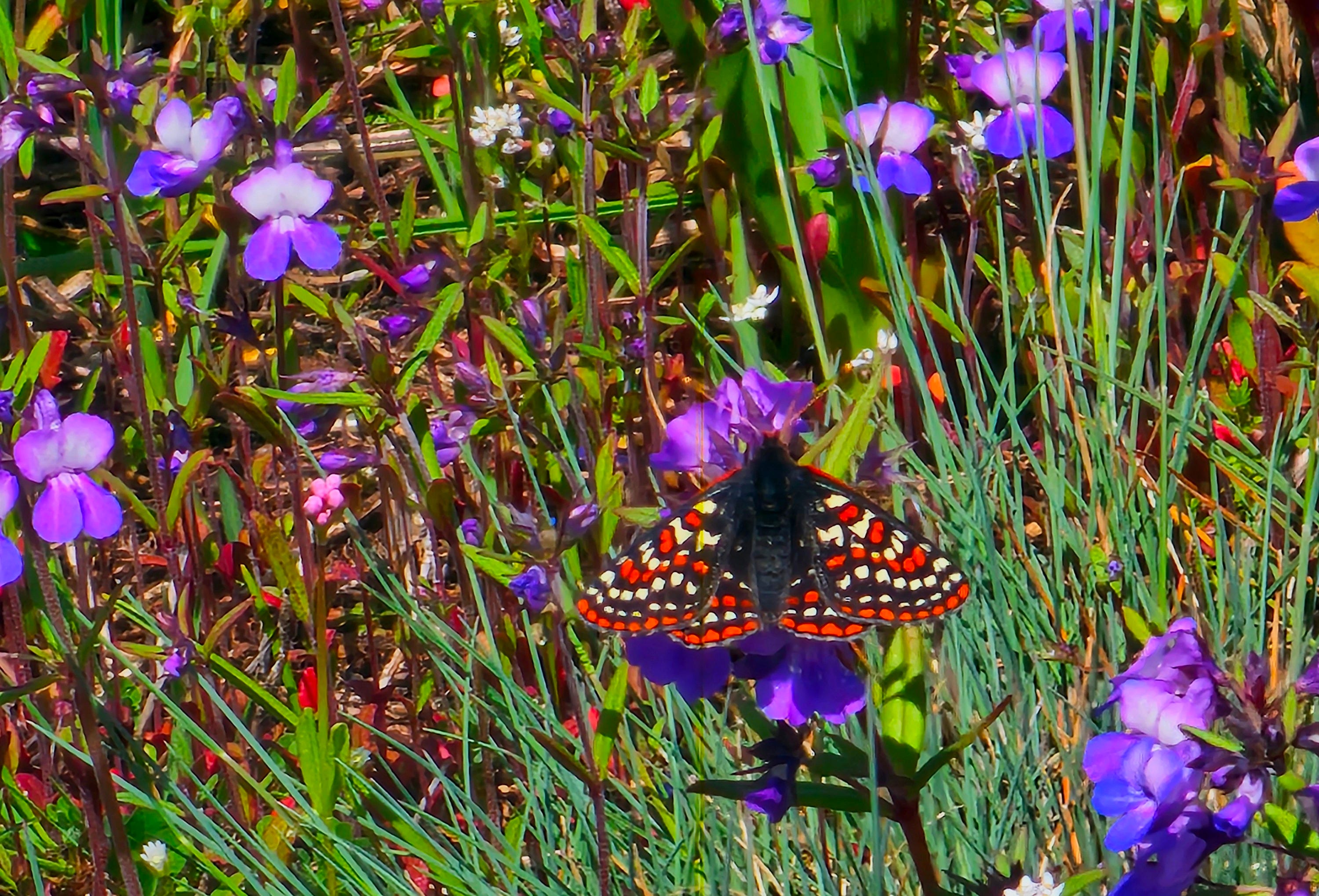
The largest intact prairie that remains is located on a military base because regular ammunition explosions mimic the controlled fires that once were a normal part of the landscape. In the Artillery Impact Area (AIA), where explosives training occurs, is the only remaining wild population of Taylor’s Checkerspot Butterflies (Euphydras editha taylorii). To monitor this federally endangered species — and hopefully, to prevent its extinction — means frequent visits to the AIA.
Precautions are taken, of course, to keep civilians as safe as possible. Everybody is required to attend an Unexploded Ordinance (UXO) class. Tourniquet training is mandatory, as well as confirming access with Range Control every time we work. Certain areas are off limits if training is scheduled there or nearby, and the No-Go Zones — clearly established in bright red — are on every map. The Crew Lead of each team has a radio tuned to Range Control to listen for evacuation orders. Even so, safety cannot be promised.
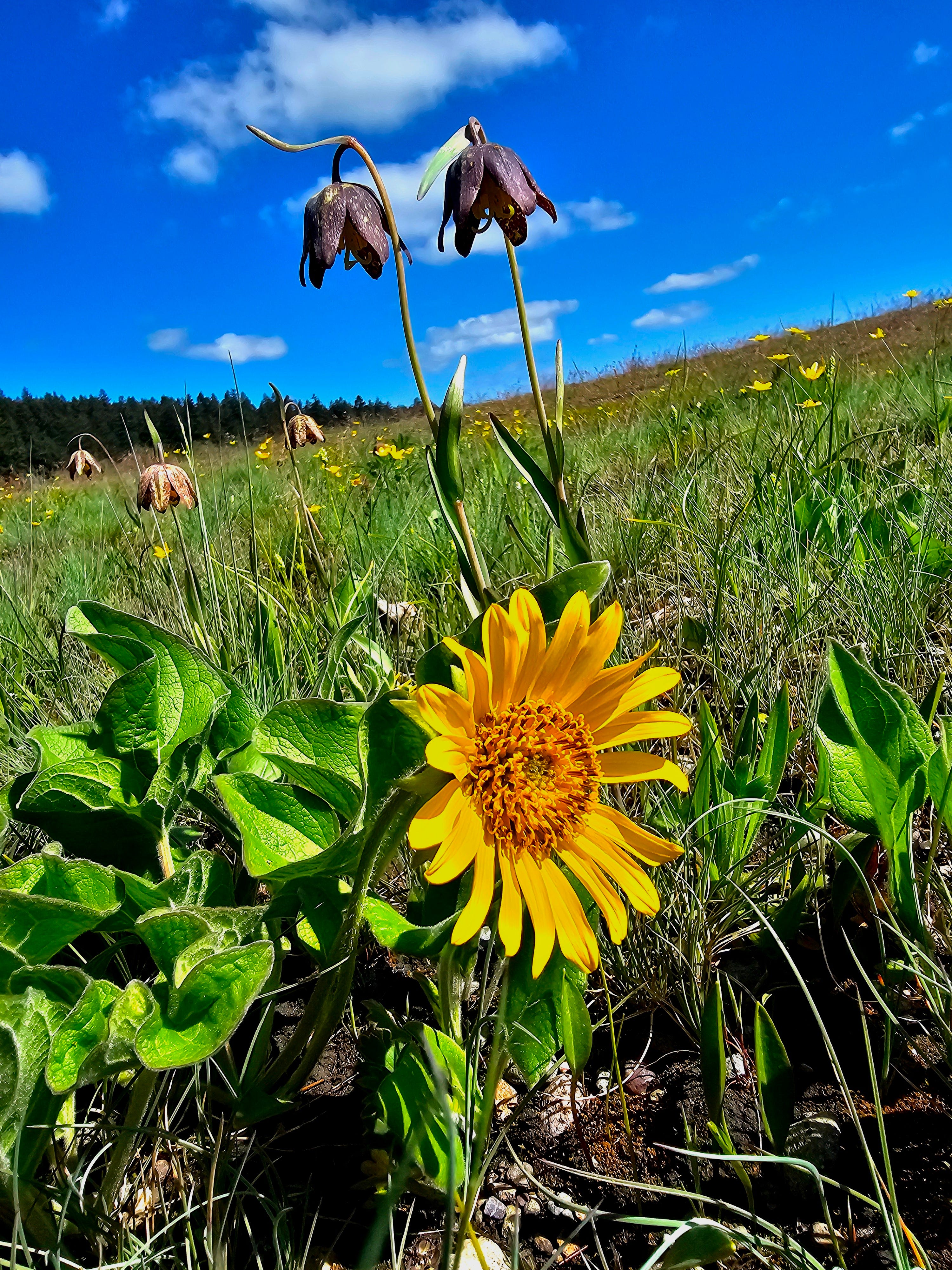
I pause at the end of my transect and tap the company iPad a few times to record data, then kneel in front of the eager face of a balsamroot bloom. I take a few pictures, trying to get the perfect angle of the native sunflower against the cerulean blue sky. I have the frame lined up just right when the radio on my shoulder crackles. “They’re detonating again in five minutes,” informs my crew lead. A large California bumblebee buzzes serenely around my ankles before deciding to try her luck elsewhere. “Copy,” I reply.
I smile at the bumblebee and continue walking. I have a job to do.
Conservation science, prairie restoration, and butterflies are a hugely complicated, intricate set of discussions. For the sake of brevity, I glossed over many details and minutiae, but if there is interest I will gladly go into more detail at a later time.